music

PGM 1213R “PROGRESSIVE AMBIENT” : july 17-24

The “progressive” label is growing, and it has nothing to do with politics.

In music, the term has a history that goes back to Progressive Folk in the 1930s. After that came Progressive Jazz from the 1940s to the 1970s, Progressive Rock, Pop, and Bluegrass in the 1960s, Progressive Country in the 1970s, Progressive Metal in the 1980s, and Progressive Electronic and Progressive House in the 1990s.

Progressive is what happens when a genre has matured, and there’s an abundance of highly skilled musicians who want to stay creatively challenged.

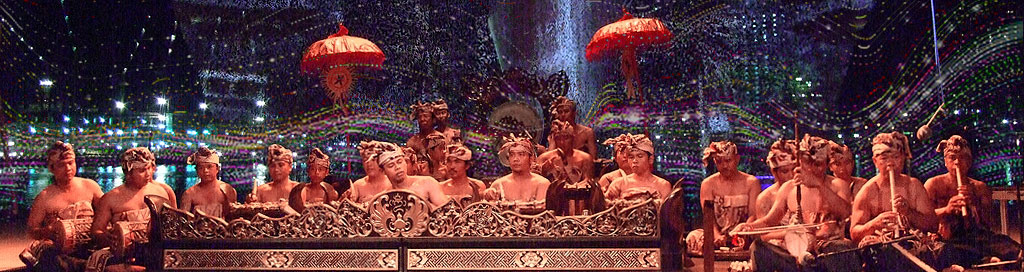
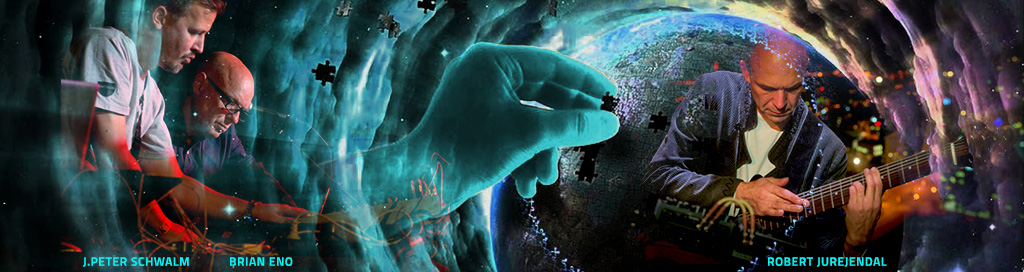
On this transmission of Hearts of Space—if the progressive label means expanding stylistic and conceptual boundaries and synthesizing cultural influences—then I’m gonna say we’re overdue for a genre…and a program…called “PROGRESSIVE AMBIENT.”

Music by NOYA, GODWIN, & JÜRJENDAL, BRIAN ENO & J.PETER SCHWALM, MASSERGY, CRAIG PADILLA & MARVIN ALLEN, JON DURANT, MANUEL GÖTTSCHING, HAMMOCK, and EYES CAST DOWN.

view playlist ] [ view Flickr image gallery ]

PGM 844R “AMERICAN CROSSROADS” : jul 3-10

EVERY JULY 4TH, we celebrate America’s independence with food, fun, and fireworks. For as long as most of us can remember, everything that’s good about America — our diversity, freedom, individuality and self-assurance — has been proudly on display.

This year, our celebration is tempered by a growing awareness of the great challenges we face in national, global and even planetary affairs. You have to look back to the 1930s to find a comparable period, but even those challenges seem limited by comparison.

So this year we celebrate the founding of America with the knowledge that American ideals and the American character are being tested. If Americans can respond positively to the challenges we face, we may look back on this period as the time of America’s maturity.

American music today reflects the maturing of our melting-pot of cultural traditions — hymns, folk and popular songs, blues, jazz, electronica, maverick classical, ethnic rhythms, and immigrant genres — a complex panorama of musical sources, freely invented and reinvented. On this transmission of Hearts of Space, we listen for the reflective side of the American soundscape…on a program called AMERICAN CROSSROADS.

Music is by BRIAN KEANE, PAUL WINTER CONSORT, SACRED EARTH, BILLY McLAUGHLIN, WILL ACKERMAN, BIOMUSIQUE, PATRICK O’HEARN, PETER OSTROUSHKO, and JOHN DOAN.

view playlist ] [ view Flickr image gallery ]

PGM 913R : ‘TRANS-ASIAN DIFFUSION’ : june 18-25

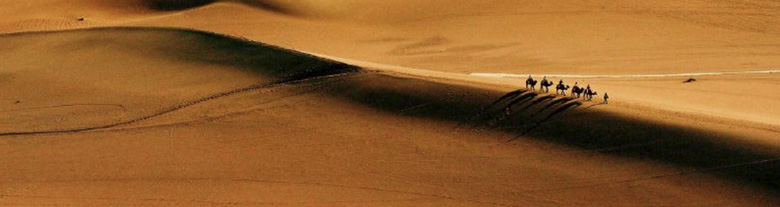
The term “The Silk Road” was invented by a German geographer in 1877. He was describing trade routes that go back to the Han Dynasty of China over 2000 years ago, connecting Europe with the major cultures of the Asian world…by land and by sea. The driving force was commercial, but like the Internet today, it also enabled the spread of social communication, technology, culture, food, and music.

In 1940 American anthropologist ALBERT KROEBER came up with a fancy name for the process: “Trans-Cultural Diffusion.” In music, traditions from many countries and intersecting influences over many centuries make sorting it out a challenge. There are common instruments, rhythms, scales, and approaches to making music. Each country added its own distinctive elements, and the process continues today—at electronic speed.

On this transmission of Hearts of Space….music derived from those way stations on the Silk Road…on a program called “TRANS-ASIAN DIFFUSION.” Music is by BOB HOLROYD, FRITZ HEEDE, TARIK BANZI, ANOUAR BRAHEM, OMAR FARUK TEKBILEK, ROBERT RICH & LISA MOSKOW, BENJY WERTHEIMER & DAVID MICHAEL.

view playlist ] [ view Flickr image gallery ]

PGM 914R ‘DREAM TRACKER’ : jun.12-19

For several decades, a small group of Western musicians have studied the ancient practice of shamanism and shamanistic music, as a way of deepening their art and their connection to the natural world.

In aboriginal and tribal cultures from the Arctic to Australia, the role of the shaman was to bridge the human and the spirit world for guidance and healing. Today, neo-shamanism and neo-shamanistic music express a longing for direct spirituality, wholeness and harmony with nature that some find lacking in our culture.

Starting from prehistoric forms of music and aboriginal instruments like the rattle, the drum, the bone whistle and the didgeridoo, they added the ambient dimensions of electronic sound and created a new genre called “techno-tribal.” Earthy and trance-inducing, it rescued electronic music from ethereal abstraction, grounded it in the sounds and rhythms of the natural world, and influenced the ecstatic electronic dance music of today.

On this transmission of Hearts of Space, we beat the drum and rattle the bones, on a journey called “DREAM TRACKER.” Shamanic poet JOSIE TAMARIN puts it this way:

The lost world waits in darkness and dream;
And in dreamworlds gods and goddesses
Beat the pulse of prayer
Dancing near blazing fires
Drumming toward greater light
Creating song from cries of loss
Fanning the glowing embers of the heart.


(quoted by MICHAEL HARNER in “The Way of the Shaman”)

Music by BYRON METCALF, DASHMESH KHALSA & STEVE ROACH; TERRA AMBIENT, CHAD KETTERING, TUU, and SCOTT AUGUST.

view playlist ] [ view Flickr image gallery ]

PGM 1422 “ELYSIUM” : may 22-29

Perhaps the most impressive ability of ambient music is its power to create virtual environments with sound. And when those environments are rare, legendary, and metaphysical—then we’re operating on a different plane of existence.

Over a thousand years before digital electronics, ancient Greek mythology conceived of a luxurious “afterlife” at the western edge of the world, in a heavenly realm called “ELYSIUM” or the “ELYSIAN FIELDS.”  It was described as an “Isle of the Blessed”— an earthly paradise where the righteous, the heroic, and the chosen were sent by the Greek gods to enjoy a perfect afterlife— pursuing their favorite athletic and artistic activities in a realm of beauty, tranquility, and abundance.

On this transmission of HEARTS of SPACE, a journey to a virtual Isle of the Blessed, and an intimate contemporary sanctuary of sound, on a program called “ELYSIUM.” Music is by DAVID HELPLING, with SCOTT REICH & JON JENKINS, STEVE ROACH & SERENA GABRIEL, DRIFTING IN SILENCE & E J R M, and ASHERA.

view playlist ] [ view Flickr image gallery ] 

PGM 1421 “FLAMENCO FUSION 2” : may 8-15

The traditional acoustic sound of Flamenco…or rather, Flamenco Fusion: a mixture of cultural influences from the medieval world to the 20th century, looking forward to the Ambient spaces of today.

From its medieval roots in the 8th century Spanish province of Al-Andalus, after the Muslim conquest of the Iberian peninsula, the music of the Spanish region of Andalusia has been a cultural melting pot, absorbing Moorish influences from North Africa, Sephardic Jewish songs and melodies, and European folk music. With the addition of Romani gypsy influences in the 18th and 19th centuries, the music we now call Flamenco, with its fiery rhythms, dark harmonies, and passionate soul was born. It’s a genre with a signature ambience and feeling that’s attracted devoted fans all over the world.

On this transmission of Hearts of Space, we catch up with the evolving sound of Flamenco as it encounters Ambient space and sensibility, on a program called “FLAMENCO FUSION 2.” Music is by ADAM DEL MONTE, BILLY WHITE, TONY SILVA, ZSÓFIA BOROS, ESTÁS TONNÉ, and OTTMAR LIEBERT.

view playlist ] [ view Flickr image gallery ] 

PGM 1209R “THE INFINITE PIANO” : may 1-8

For an instrument that’s been around for over three hundred years, the piano continues to surprise. Ever since the arrival of popular electronic instruments, ambient musicians have been busy reinventing the sound and the setting of the piano.

Musically, the 19th century Romantic Classical composers who perfected the piano concerto inspired VANGELIS (and thousands of new age pianists) to create personal, “high affect,” emotionally-centered music—while the gentle, ironic French proto-ambient composer ERIK SATIE inspired others to create quiet, unpretentious miniatures. Still others have taken the instrument into cosmic space, where it chimes and sings across the starfields.

In the 21st century, the piano is (almost) everywhere.

On this transmission of Hearts of Space…(with appreciation to MICHAEL BROOK, creator of the Infinite Guitar) the evolving sound of “THE INFINITE PIANO.” Music is by VANGELIS, CHAD LAWSON, TOM EATON, BILL DOUGLAS, BEN LUKAS BOYSEN, and NILS FRAHM.

view playlist ] [ view Flickr image gallery ] 

PGM 1420 ‘STELLARIS’ : apr.24-may 1

The idea of traveling through interstellar or cosmic space must go back to prehistoric times, when early homo sapiens cast their eyes on the night sky… and wondered.

Imagination got an upgrade with the invention of the optical telescope in 1608, which brought the moon and our neighboring planets into focus, and revealed the number of stars in our home galaxy and beyond appeared to be…infinite.

The audacious idea of exploring the starfields also attracted musicians. Austrian composer FRANZ JOSEPH HAYDN’s monumental 1798 oratorio “THE CREATION” is a powerful early example, leading to classical favorites like GUSTAV HOLST’s 1920 orchestral suite “THE PLANETS.”

But the big move to cosmic imagery in music came in the mid-20th century, when German composer KARLHEINZ STOCKHAUSEN used the term “space music” to describe his early synthetic works, and went on to create music with outer space themes. His influence on European composers of electronic music (lubricated, to be sure, by psychedelic drugs) led to the German Kosmische Musik genre in the 1970s, which became one of the foundations of the Progressive Electronic, New Music, New Age, and Ambient genres.

On this transmission of Hearts of Space, it’s another journey in the cosmic starfields, on a program called “STELLARIS.” The word originated in the 1650s from the Late Latin, meaning “pertaining to a star.”

view playlist ] [ view Flickr image gallery ] 

PGM 1396R “WARMING TREND”: apr.17-24

Ahhhh, spring at last…or is it? Our most anticipated season has a habit of arriving in fits and starts: a few days of temperate glory…and then a chilled rerun of late winter; a sweet day of sunshine and birdsong…and then, a nasty day of cold rain and hail. It breeds a kind of disorientation you feel in your body…and makes you question where you are.

When ambient musicians focus on spring, they’re thinking of brighter timbres, more energetic rhythms, and warmer harmonies. Will the weather take the hint? It’s a toss-up, but the psychological effect, at least, can be comforting.

On this transmission of Hearts of Space…ambient electronics to summon and celebrate spring, on a program called “WARMING TREND.” Music is by ERIK WØLLO, RUDY ADRIAN, STEVE ROACH, ANDREW LAHIFF, AMONGST MYSELVES, TOM EATON, and PATRICK O’HEARN.

view playlist ] [ view Flickr image gallery ] 

PGM 1419 “HANDPAN EVOLUTION” : apr. 10-17

We’re floating gently into spring on the resonant steel percussion tones of the “Hang.”

It’s an instrument with a story that goes back to the beginning of the 21st century, when Swiss instrument makers SABINA SCHäRER and FELIX ROHNER of PANArt Manufacturing were restless. They’d been making steel drums—the popular steel band instruments of the Caribbean islands of Trinidad and Tobago. They wanted to go in a new direction, and in a burst of technical and artistic creativity, they invented the Hang.

The story of the Hang is part of a longer, older story of the evolution of tuned percussion. It begins in the 18th century with the African “talking drum.” By mid-20th century it leads to the “steel drum” or “steel pan” — made from 55 gallon industrial oil drums, played with rubber tipped mallets on a concave surface, and tuned to a conventional 12-note chromatic scale.

The Hang was released in 2000 to worldwide acclaim. Demand soon overwhelmed the artisanal production methods of PANArt Manufacturing, which led to similar instruments being offered by other makers. The copyright of the brand name “Hang” was successfully established by PANArt, so other makers switched to the more accurate generic term “handpan” to describe the new instruments. There are now hundreds of makers and thousands of players in the worldwide handpan community, and PANArt has filed a lawsuit to establish its patent on the design of the Hang, as well as the name.

On this transmission of Hearts of Space, a tuned percussion journey for resonant steel, on a program called “HANDPAN EVOLUTION.”

view playlist ] [ view Flickr image gallery ]