
New Programs

PGM 1431 “INTANGIBLE HERITAGE” : oct. 9-16

A Journey on the Great Eurasian Steppe

The softly rolling hills and endless grasslands of “The Great Eurasian Steppe” are home to the mournful, archaic tones of the Armenian duduk—a more soulful member of the double reed family of woodwind instruments, like the western oboe and English horn.

A “steppe” is an eco-region of grassland plains with no trees except next to rivers and lakes. “The Great Eurasian Steppe” is the world’s largest, extending some 5,000 miles from today’s Eastern Europe, across Russia and the “stan” countries of Central Asia, through Manchuria and Mongolia to the western edge of China.

Since the Middle Paleolithic era over 100,000 years ago, the Eurasian Steppe has been the main overland route between Europe and Asia—the much older economic, political, and cultural predecessor of the more famous Silk Road, which matured during the Middle Ages.

In 2005, UNESCO (The United Nations Educational, Scientific and Cultural Organization) proclaimed the Armenian duduk and its music a “Masterpiece of the Intangible Heritage of Humanity,” along with other traditional creations of cultural communities.

On this transmission of Hearts of Space from our friendly Canadian guest producer D.J. EGAN, a program inspired by the ethno-ambient music of the Great Eurasian Steppe, with influences and instruments from ARMENIA, GREECE, TURKEY, LITHUANIA, FINLAND, and RUSSIA, and music by ARA DINKJIAN, SAVINA YANNATOU & PRIMAVERA EN SALONICO, DMITRY SOUL, DELAYMAN, SANS, SAULIUS PETREIKIS + RASA SERRA + THE UNIT 7 ALLSTARS, C.DIAB, and TWILIGHT TAPES.

/[ view playlist ]   [ view Flickr image gallery ]
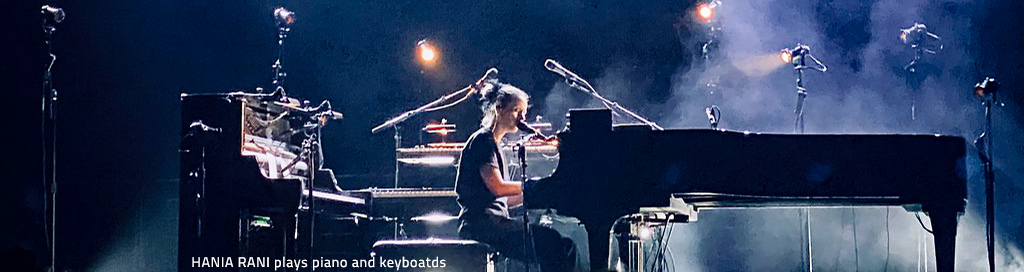
PGM 1430 “PROTOCOLS FOR AMBIENT PIANO” sept. 25-oct. 2

CONSIDER THE PIANO, SPACEFANS. For an instrument that was invented in Italy over 300 years ago, and can point to ancestors like the third century BC Greek “hydraulis.”—a shoreline pipe organ powered by Mediterranean waves — and early keyboard instruments like the Clavichord and the Harpsichord — the evolution of the piano might seem to be a settled matter. And while the forms and technologies of the modern piano were largely established by the early 20th century, there were still hundreds of improvements in design, materials and construction that continue today.

The most revolutionary development — the 20th century invention of playable keyboard-controlled electronic synthesizers — was driven by a furious pace of innovation at American, Japanese, and German companies, and vastly expanded the sonic capability of keyboard instruments.

All this work has given ambient musicians a wealth of creative resources to draw on. Early masterworks like the Romantic Classical orchestrations of VANGELIS, the chilled electronic flights of KLAUS SCHULZE, the hypnotic sequencer rhythms of TANGERINE DREAM, the abstract electro-acoustic environments of BRIAN ENO, and the extended electronic meditations of STEVE ROACH — created stylistic protocols for generations of ambient artists who followed.

On this transmission of Hearts of Space, new music for piano and electronic keyboards inspired by the early pioneers, on a program called “PROTOCOLS FOR AMBIENT PIANO.” Music is by TOM EATON, BRUNO SANFILIPPO, ÓLAFUR ARNALDS, NILS FRAHM, HANIA RANI,TIM STORY & ACHIM ROEDELIUS, KEVIN KELLER, and BEN LUCAS BOYSEN, and PAUL HASLINGER & CHRISTIAN WITTMAN.

[ view playlist ]   [ view Flickr image gallery ]
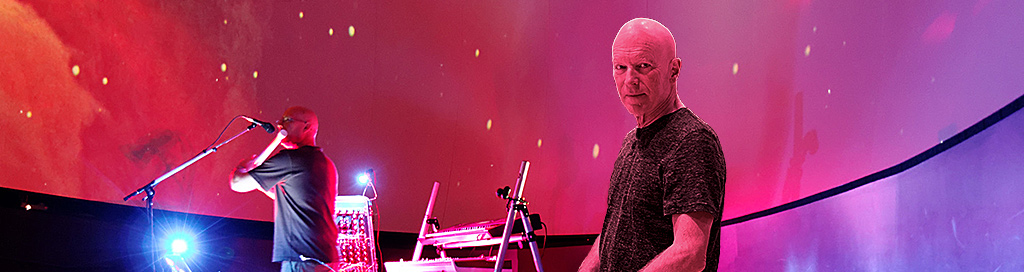
PGM 1429 “MASTERY” : sept.4-11

OVER THE LAST 40 YEARS, the music of both MICHAEL STEARNS and ROBERT RICH has earned the highest respect from long-time listeners to this program, as well as serious ambient fans around the world. 

Beginning in the 1970’s, STEARNS in Los Angeles and in the 1980’s RICH at Stanford, were among the first to create important original work in those formative days of popular electronic music. Even when the early instruments were frustrating and difficult to work with, they persisted — because electronics opened up vast new realms of creative expression.

Later, they both integrated acoustic instruments and wordless voices into their music, enriching and deepening their sound. In time, Stearns moved into scoring and music supervision for immersive IMAX films and multi-channel theme park rides, and traveled the world recording natural environmental sounds, while ROBERT RICH became a prolific recording artist, collaborator, and mastering engineer for other independent musicians, created high quality sample libraries, and consulted on the design and development of electronic instruments.

In 2026, with Stearns 77 and Rich 63, they´re at the peak of their powers individually, and the only thing left undone was their first full collaboration as mature ambient masters, the mysteriously titled “REUNION OF BREATH AND WAVES.”

Today, the career of an ambient musician is impossible to predict. The old gatekeepers are gone, replaced by powerful personal studios and a digital distribution system that connects composers and performers with a worldwide audience. Success is not guaranteed; you must be motivated, persistent, innovative, and impressively talented. But for those who can live with the uncertainty, time and practice can bring “maturity, ” and with it, the possibility of “mastery”— levels of excellence sought by many, achieved by few. 

On this transmission of HEARTS of SPACE, we celebrate the expansion of creative space and artistic freedom, with electro-acoustic music by MICHAEL STEARNS and ROBERT RICH from “REUNION OF BREATH AND WAVES;” by DREAMSCAPIST from “EREMITISM;” by KELLY DAVID from “ILLUSIVE;” and by JEFF PEARCE from “SKYWARD.”

The art of creating value with skill, and doing it perfectly.  A program called “MASTERY”…on this transmission… of Hearts of Space.

[ view playlist ]   [ view Flickr image gallery ]

PGM 1428 “INDIA EVOLUTION 2” : aug.21-28

BACK IN 2009, I wrote this introduction to a program called ‘INDIA EVOLUTION” :

“Hundreds of years ago, while Western music turned right at polyphony, harmony, and the equal-tempered scale, Indian classical music continued to develop the old modal system of scales and natural intervals, in a vocal-centered, monophonic style.”

“Where we created chords and counterpoint, monumental symphonies, hymns and songs, Indian music continued to evolve the melodic sophistication of raga, the rhythmic complexity of tala, and the patient pursuit of mood and depth.”

On this transmission of Hearts of Space, we return to the sublime world of Indian Classical and Indian-influenced ambient music, on a program called “INDIA EVOLUTION 2.” Music is by JASDEEP SINGH DEGUN, PREM JOSHUA & MANISH VYAS, ANCIENT FUTURE, FILIP HOLM, ROSS AINSLIE, AMELIA CUNI & WERNER DURAND, STEVE GORN & MANOSE, and RAJENDRA TEREDESAI.

[ view playlist ] [ view Flickr image gallery ]
PGM 1427 “DOWNTEMPO TO AMBIENT” : aug 7-14

Downtempo electronic music has been enjoying an unexpected revival. After years of being overshadowed by high-energy Electronic Dance Music, Downtempo has found new cultural value as a sonic counter-weight to our intense, relentless, media-saturated, hyperconnected, fast-paced world.

Today’s downtempo has evolved beyond its 1990’s roots in “Trip-Hop” in the UK city of Bristol and has embraced globalization. It now incorporates multi-cultural folk instruments and so-called “organic electronica,” is promoted as “functional music” supporting productivity, and is heard daily by millions on streaming playlists curated by algorithms.

Global exposure has also inspired more serious use in therapeutic environments as a method for enhancing mindfulness, deep focus, and self-discovery—which completes the circle back to Ambient.

On this transmission of Hearts of Space…it’s a midsummer journey from Downtempo beats to Ambient atmospheres called “DOWNTEMPO TO AMBIENT.” Music Is by TWILIGHT ARCHIVE, MARCONI UNION, AËR, ALEX HAAS & BILL LASWELL, CHRIS RUSSELL, and DIGITONAL.

[ view playlist ] [ view Flickr image gallery ]

PGM 1426 “ARABIAN NIGHTS 2”

It takes increasing effort, but if we can just turn away from the political chaos that has once again overtaken the Middle East, we can still hear the overtones of artistic traditions that have been evolving for over 5000 years.

From source cultures in Arabia, North Africa, and Persia, come instruments and musical traditions. Today, both native and expatriate artists are working to extend these traditions and adapt them to the world of contemporary music. It’s an effort that aims for harmony and understanding in the face of dissonance and division: “cultural” in the best sense — a human treasure to be loved and shared.

On this transmission of Hearts of Space, the hypnotic rhythms, sinuous melodies, and ambient atmospheres of the Middle East—on a program called ARABIAN NIGHTS 2. Music is by MICHEL BANABILA and MEHMET POLAT, OPIUM MOON, ZIKR PROJECT, NAO SOGABE, FILIP HOLM, RAFAEL KRUX, and ANOUAR BRAHEM.

[ view playlist ] [ view Flickr image gallery ]

PGM 1425 “AMBIENT WORLD” : july 10-17

The term “World Music” was invented by an American ethnomusicologist in the 1960s. Originally intended to refer only to folk or ethnic music from non-Western cultures, over time its frame of reference expanded to include any form of popular music with ethnic instruments, style, or texture. A good example is Reggae music from Jamaica.

The 1970s introduced the radically new sounds and techniques of electronic music. Traditional World Music was, of course, 100% acoustic. Electricity wasn’t widely available until the late 19th century, but it grew fast. And by the 1980s, the ethereal atmospheres of electronic and ambient music were converging with the expressive acoustic sounds of traditional folk and ethnic music.

At the same time, electronics were expanding the spatial and tonal dimensions of World Music. And where musicians had formerly been identified by their instruments as “acoustic” or “electronic,” a new term was invented to capture the new, hybrid genre: “Electro-Acoustic” Today it’s becoming the dominant approach to all genres of popular music.

On this transmission of Hearts of Space, an Electro-Acoustic journey in musical time and cultural space called AMBIENT WORLD.

This edition of Hearts of Space was originated by guest producer DJ EGAN. There’s a whole lot more by DJ EGAN on Mixcloud.com. Go to https://www.mixcloud.com/the-armchair-traveler

[ view playlist ] [ view Flickr image gallery ]
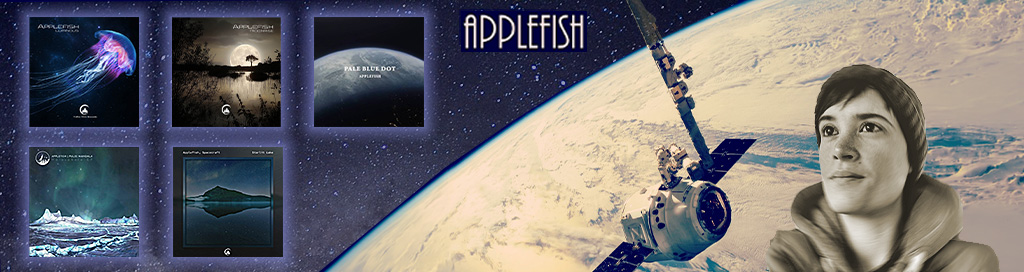
PGM 1424 ‘APPLEFISH’ : jun 26-jul 3

We’re floating on a luxurious bed of pipe organ—the first thing you hear on the 2022 debut album of Bristol, England, electronic musician NICOLA “NIK” DAVIES—best known by her recording alias APPLEFISH.

By our unofficial count, she’s a member of the seventh or eighth generation of electronic musicians, starting from its formative years in the 1920s and 30s at the dawn of playable electronic instruments like the Russian Theremin and the French Ondes Martenot. From the 1930s to the 1960s, a handful of academic laboratories became the venues for the development of electronic music and electro-acoustic tape music. They had the real estate, the hardware, and the money.

The transition from academic to popular electronic music was driven by the invention of analog synthesizers in the 1970s. Relatively affordable instruments and recording tools enabled a new generation of popular electronic artists in Germany like TANGERINE DREAM, KLAUS SCHULZE, and ASHRA, who invented a cosmic sound that went viral and spread to Europe, the U.S. and Japan.

That’s where Hearts of Space began, as a Bay Area late night radio program in 1973, and then a nationally syndicated program in 1983, with a mission to expand the audience for “ambient, space, atmospheric and contemplative music.”

Disco had pioneered use of electronic instruments in dance music in the late 1960s. By the 1980’s a new generation of creative DJs and live performers attracted a worldwide audience for high-energy EDM (Electronic Dance Music). BRIAN ENO defined Ambient in 1978, while a group of serious electronic composers and recording artists like STEVE ROACH, MICHAEL STEARNS, ROBERT RICH, and thousands more around the world, made personal artistic music, and self-released it on cassette and CD. Today they upload it to free or inexpensive internet streaming services that provide effortless access to a worldwide audience.

And it is here, dear space fan, that we encounter the latest generation of electronic recording artists like the subject of this program, NICOLA “NIK” DAVIES aka APPLEFISH. She describes her music with precision as “a fusion of space ambient, downtempo, and electronica, with substantial cross-pollination from drone, psy-chill, and modern classical genres. Much of the Applefish discography explores cosmic and astronomical themes, guiding listeners through ethereal voyages and otherworldly realms. The music interlaces immersive atmospheres with subtle, yet evocative melodic lines and layered, shimmering textures, intentionally evoking a sense of deep introspection and cosmic wonder.”

Thanks, Nik. Could not have said it better. Early music by APPLEFISH… on this transmission… of Hearts of Space.

[ view playlist ]. [ view Flickr image gallery ]

PGM 1423 ‘ALTIPLANO 3’ : june 5-12

Long before Spanish explorers arrived at the western edge of South America, the rugged regions of Bolivia, Peru, Ecuador and Chile bordered by the Andes Mountains were home to native Inca tribes that defined traditional Andean folk music.

After the colonial period, the charango and the ronroco, small 10-string instruments derived from the early Spanish guitar called the vihuela, became popular. Today they dominate the genre, along with the quena — an end-blown reed flute, and the antara — a semi-circular panpipe with an airy tone that sounds brilliant in the high mountain air.

Andean music grew exponentially during the “World Music” trend of the 1970s and 80s, spawning hundreds of new groups, collaborations, and popular songs, while Harawi, an ancient traditional genre with slow, soulful, melodic songs played on the quena, shared an audience with New Age music. Those days are gone, but the genre has gained renewed attention in the 21st century from its use in major film scores by GUSTAVO SANTAOLALLA and others.

On this transmission of Hearts of Space, new Andean music by GUSTAVO SANTAOLALLA, AUKAI, JORGE ALFANO, OSCAR REYNOLDS, and AL LETHBRIDGE — inspired by the folk sounds of the high Andes plateau, on a program called “ALTIPLANO 3.”

[ view playlist ] [ view Flickr image gallery ]

PGM 1422 “ELYSIUM” : may 22-29

Perhaps the most impressive ability of ambient music is its power to create virtual environments with sound. And when those environments are rare, legendary, and metaphysical—then we’re operating on a different plane of existence.

Over a thousand years before digital electronics, ancient Greek mythology conceived of a luxurious “afterlife” at the western edge of the world, in a heavenly realm called “ELYSIUM” or the “ELYSIAN FIELDS.”  It was described as an “Isle of the Blessed”— an earthly paradise where the righteous, the heroic, and the chosen were sent by the Greek gods to enjoy a perfect afterlife— pursuing their favorite athletic and artistic activities in a realm of beauty, tranquility, and abundance.

On this transmission of HEARTS of SPACE, a journey to a virtual Isle of the Blessed, and an intimate contemporary sanctuary of sound, on a program called “ELYSIUM.” Music is by DAVID HELPLING, with SCOTT REICH & JON JENKINS, STEVE ROACH & SERENA GABRIEL, DRIFTING IN SILENCE & E J R M, and ASHERA.

[ view playlist ] [ view Flickr image gallery ]