Encore Programs

PGM 1220R “AMBIENT TRAVELER 2” : jul 31-aug 7

In the warm, bright days of summer, an ambient fan yearning for travel to exotic cultures will book a flight on Sequencer Airlines. With its steady pulse, it’s a perfect rhythm for moving through space.

The roots go back to 9th century Persia, but the music sequencer idea really got going in the 19th century after the Industrial Revolution, with popular devices like music boxes, mechanical organs, and player pianos. By the first generation of electronic synthesizers in the 1960s and 70s, the Step Sequencer was a machine that turned equal length notes into repeating rhythm patterns. They’re simple, delightfully hypnotic, and fun to work with.

Today things are more complicated, but a lot more powerful. We have audio sample sequencers, loop-based creative music software, phrase samplers, and digital audio recording software many times more powerful than the primitive sequencers of early synths-and hey! They’re still fun to work with.

On this transmission of Hearts of Space…a journey from kinetic sequencer patterns to exotic Southeast Asian ambient soundscapes-on a program called “AMBIENT TRAVELER 2.” Music is by ATOMIC SKUNK, DAVID PARSONS, CHRISTEL VERAART, CHRONOTOPE PROJECT, LOREN NERELL, ALIO DIE & LORENZO MONTANA, and RICHARD BONE.

view playlist ] [ view Flickr image gallery ]

PGM 1213R “PROGRESSIVE AMBIENT” : july 17-24

The “progressive” label is growing, and it has nothing to do with politics.

In music, the term has a history that goes back to Progressive Folk in the 1930s. After that came Progressive Jazz from the 1940s to the 1970s, Progressive Rock, Pop, and Bluegrass in the 1960s, Progressive Country in the 1970s, Progressive Metal in the 1980s, and Progressive Electronic and Progressive House in the 1990s.

Progressive is what happens when a genre has matured, and there’s an abundance of highly skilled musicians who want to stay creatively challenged.

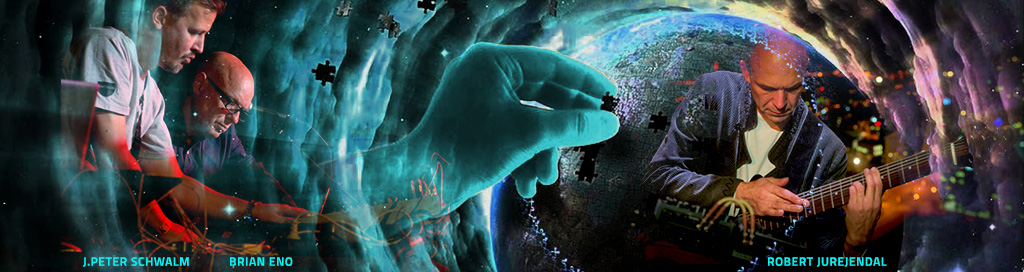
On this transmission of Hearts of Space—if the progressive label means expanding stylistic and conceptual boundaries and synthesizing cultural influences—then I’m gonna say we’re overdue for a genre…and a program…called “PROGRESSIVE AMBIENT.”

Music by NOYA, GODWIN, & JÜRJENDAL, BRIAN ENO & J.PETER SCHWALM, MASSERGY, CRAIG PADILLA & MARVIN ALLEN, JON DURANT, MANUEL GÖTTSCHING, HAMMOCK, and EYES CAST DOWN.

view playlist ] [ view Flickr image gallery ]

PGM 844R “AMERICAN CROSSROADS” : jul 3-10

EVERY JULY 4TH, we celebrate America’s independence with food, fun, and fireworks. For as long as most of us can remember, everything that’s good about America — our diversity, freedom, individuality and self-assurance — has been proudly on display.

This year, our celebration is tempered by a growing awareness of the great challenges we face in national, global and even planetary affairs. You have to look back to the 1930s to find a comparable period, but even those challenges seem limited by comparison.

So this year we celebrate the founding of America with the knowledge that American ideals and the American character are being tested. If Americans can respond positively to the challenges we face, we may look back on this period as the time of America’s maturity.

American music today reflects the maturing of our melting-pot of cultural traditions — hymns, folk and popular songs, blues, jazz, electronica, maverick classical, ethnic rhythms, and immigrant genres — a complex panorama of musical sources, freely invented and reinvented. On this transmission of Hearts of Space, we listen for the reflective side of the American soundscape…on a program called AMERICAN CROSSROADS.

Music is by BRIAN KEANE, PAUL WINTER CONSORT, SACRED EARTH, BILLY McLAUGHLIN, WILL ACKERMAN, BIOMUSIQUE, PATRICK O’HEARN, PETER OSTROUSHKO, and JOHN DOAN.

view playlist ] [ view Flickr image gallery ]

PGM 913R : ‘TRANS-ASIAN DIFFUSION’ : june 18-25

The term “The Silk Road” was invented by a German geographer in 1877. He was describing trade routes that go back to the Han Dynasty of China over 2000 years ago, connecting Europe with the major cultures of the Asian world…by land and by sea. The driving force was commercial, but like the Internet today, it also enabled the spread of social communication, technology, culture, food, and music.

In 1940 American anthropologist ALBERT KROEBER came up with a fancy name for the process: “Trans-Cultural Diffusion.” In music, traditions from many countries and intersecting influences over many centuries make sorting it out a challenge. There are common instruments, rhythms, scales, and approaches to making music. Each country added its own distinctive elements, and the process continues today—at electronic speed.

On this transmission of Hearts of Space….music derived from those way stations on the Silk Road…on a program called “TRANS-ASIAN DIFFUSION.” Music is by BOB HOLROYD, FRITZ HEEDE, TARIK BANZI, ANOUAR BRAHEM, OMAR FARUK TEKBILEK, ROBERT RICH & LISA MOSKOW, BENJY WERTHEIMER & DAVID MICHAEL.

view playlist ] [ view Flickr image gallery ]

PGM 914R ‘DREAM TRACKER’ : jun.12-19

For several decades, a small group of Western musicians have studied the ancient practice of shamanism and shamanistic music, as a way of deepening their art and their connection to the natural world.

In aboriginal and tribal cultures from the Arctic to Australia, the role of the shaman was to bridge the human and the spirit world for guidance and healing. Today, neo-shamanism and neo-shamanistic music express a longing for direct spirituality, wholeness and harmony with nature that some find lacking in our culture.

Starting from prehistoric forms of music and aboriginal instruments like the rattle, the drum, the bone whistle and the didgeridoo, they added the ambient dimensions of electronic sound and created a new genre called “techno-tribal.” Earthy and trance-inducing, it rescued electronic music from ethereal abstraction, grounded it in the sounds and rhythms of the natural world, and influenced the ecstatic electronic dance music of today.

On this transmission of Hearts of Space, we beat the drum and rattle the bones, on a journey called “DREAM TRACKER.” Shamanic poet JOSIE TAMARIN puts it this way:

The lost world waits in darkness and dream;
And in dreamworlds gods and goddesses
Beat the pulse of prayer
Dancing near blazing fires
Drumming toward greater light
Creating song from cries of loss
Fanning the glowing embers of the heart.


(quoted by MICHAEL HARNER in “The Way of the Shaman”)

Music by BYRON METCALF, DASHMESH KHALSA & STEVE ROACH; TERRA AMBIENT, CHAD KETTERING, TUU, and SCOTT AUGUST.

view playlist ] [ view Flickr image gallery ]

PGM 0873R ‘MORE AMBIENT COOL’ : may 29-june 5

Program 873 banner - Miles Davis

We begin with the mysterious “Fourth World” music of ambient trumpeter/composer JON HASSELL: an apparition arising out of the hazy cross-cultural soundscape between classical Indian vocal music, electronics, and cool jazz. It’s a sound that’s been widely influential in contemporary music for over 25 years — a popular atmospheric hybrid that defies category…by design.

On this transmission of Hearts of Space, we invoke the spirits of departed masters like JON HASSELL, cool jazz trumpeter MILES DAVIS, Indian vocalist master PANDIT PRAN NATH and electronics pioneer KARLHEINZ STOCKHAUSEN…on a journey called MORE AMBIENT COOL. Additional music by PAUL HASLINGER, TWILIGHT ARCHIVE, PAUL SCHUTZE, NELSON FOLTZ & TOM LYNN, TOM HEASLY, and HAROLD BUDD.

[ view playlist ] [ view Flickr image gallery ]

PGM 1209R “THE INFINITE PIANO” : may 1-8

For an instrument that’s been around for over three hundred years, the piano continues to surprise. Ever since the arrival of popular electronic instruments, ambient musicians have been busy reinventing the sound and the setting of the piano.

Musically, the 19th century Romantic Classical composers who perfected the piano concerto inspired VANGELIS (and thousands of new age pianists) to create personal, “high affect,” emotionally-centered music—while the gentle, ironic French proto-ambient composer ERIK SATIE inspired others to create quiet, unpretentious miniatures. Still others have taken the instrument into cosmic space, where it chimes and sings across the starfields.

In the 21st century, the piano is (almost) everywhere.

On this transmission of Hearts of Space…(with appreciation to MICHAEL BROOK, creator of the Infinite Guitar) the evolving sound of “THE INFINITE PIANO.” Music is by VANGELIS, CHAD LAWSON, TOM EATON, BILL DOUGLAS, BEN LUKAS BOYSEN, and NILS FRAHM.

view playlist ] [ view Flickr image gallery ] 

PGM 1396R “WARMING TREND”: apr.17-24

Ahhhh, spring at last…or is it? Our most anticipated season has a habit of arriving in fits and starts: a few days of temperate glory…and then a chilled rerun of late winter; a sweet day of sunshine and birdsong…and then, a nasty day of cold rain and hail. It breeds a kind of disorientation you feel in your body…and makes you question where you are.

When ambient musicians focus on spring, they’re thinking of brighter timbres, more energetic rhythms, and warmer harmonies. Will the weather take the hint? It’s a toss-up, but the psychological effect, at least, can be comforting.

On this transmission of Hearts of Space…ambient electronics to summon and celebrate spring, on a program called “WARMING TREND.” Music is by ERIK WØLLO, RUDY ADRIAN, STEVE ROACH, ANDREW LAHIFF, AMONGST MYSELVES, TOM EATON, and PATRICK O’HEARN.

view playlist ] [ view Flickr image gallery ] 

PGM 1368 ‘SACRED SONGS of DEVOTION’ : apr.3-10

This week on Hearts of SpaceSACRED SONGS OF DEVOTION” — a special program of choral and instrumental music for Easter, from our longtime guest producer for classical and sacred music ELLEN HOLMES. 

The show includes choral selections from Ellen’s compilation “SACRED SONGS of MARY: Devotion”—the third in her series of albums showcasing music honoring the Virgin Mary, mother of Jesus. “In Western culture,” writes Ellen, “Mary is the personification of tenderness, compassion, forgiveness, protection, and unconditional love—emotions reflected in music praising her or beseeching her comfort and help.”

This wide-ranging program includes sacred choral music from the Russian Orthodox mass, a 12th Century song by HILDEGARD VON BINGEN, 17th century sacred music from Spain by ALONSO LOBO, sacred works by19th and 20th century composers JOHN TAVENER, SERGEI RACHMANINOFF, PYOTR ILYICH TCHAIKOVSKY, and MAURICE DURUFLÉ, and contemporary works by SIGUR RÓS, LISA GERRARD, DAVID DARLING, MAX RICHTER, and ARVO PÄRT. 

Choral and instrumental music for Easter: “SACRED SONGS OF DEVOTION”…on this transmission of Hearts of Space.

[ view playlist ] [ view Flickr image gallery ]

PGM 1044R : “ETHNOTRONIC”— mar. 20-27

THE TRIBAL MUSIC TRADITIONS of Asia, Africa and the Americas stretch back to the mists of pre-history. For perhaps a hundred centuries, music was made with simple, even primitive instruments: flutes, rattles, drums and percussion; lyres, harps and strings; and wind instruments of various sizes and tones. It was an all-acoustic world, where music and instruments evolved slowly.

Then in the late 19th and 20th centuries, electricity and electronics began to transform the world and transform music. First came the telegraph and the telephone, then radio, then recordings, and then the instruments themselves. Guitars and pianos became electric…and then electronic. And finally, purely electronic instruments of dazzling variety and unlimited potential to create new sounds.

After the electronic music revolution of the 1960s and 70s, the entire studio became a musical instrument, and the sound of recordings has never been quite the same. Today, ethnic instruments and genres can be set in new Ambient soundscapes, a fusion of the old world and the new.

On this transmission of Hearts of Space, ethnic instruments join electronic ambient, on a program called “ETHNOTRONIC.” Music is by TUU, GREEN ISAC, SACRED EARTH, CHINMAYA DUNSTER, MANEESH DE MOOR, ARCHETRIBE, LOREN NERELL & MARK SEELIG, STILLPOINT, and MICHEL BANABILA.

view playlist ] [ view Flickr image gallery ]