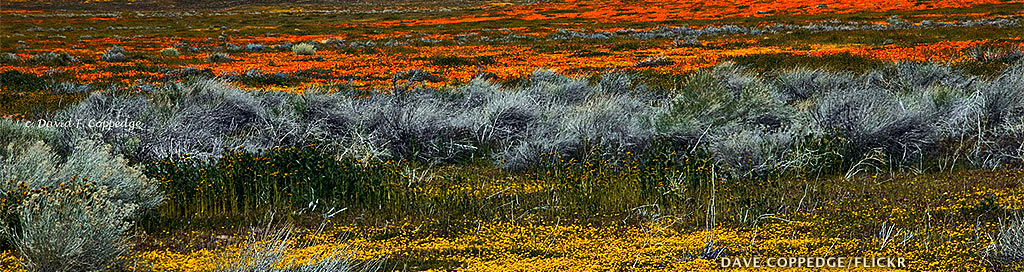
THE SUN begins its long withdrawal from the northern hemisphere after the summer solstice in June. After the autumn equinox in September, the transition seems to accelerate. The days grow shorter, the nights grow longer, and the temperature cools, while the natural world changes color and prepares for the winter to come.
Since medieval times we’ve called this season “fall.” The word comes from Middle English, with Old English and Old German roots. Falling implies movement downward, and in autumn, declining solar energy brings a feeling of descending or falling into the season. In music it’s marked by slowing tempos, descending chord progressions, darkening timbres, and wistful, even melancholy emotions.
On this transmission of Hearts of Space…we descend into the autumn soundscape, a program called “FALLING.” Music is by DAVID DARLING, JOEP BEVING, CHRISTOPHER TIGNOR, HAMMOCK, LUDOVICO EINAUDI, and TOM EATON.
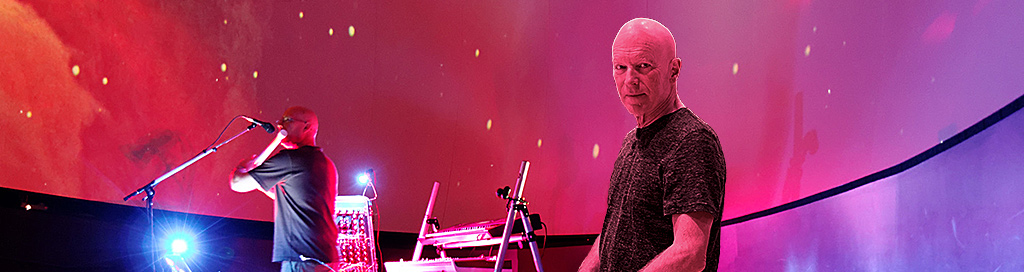
OVER THE LAST 40 YEARS, the music of both MICHAEL STEARNS and ROBERT RICH has earned the highest respect from long-time listeners to this program, as well as serious ambient fans around the world.
Beginning in the 1970’s, STEARNS in Los Angeles and in the 1980’s RICH at Stanford, were among the first to create important original work in those formative days of popular electronic music. Even when the early instruments were frustrating and difficult to work with, they persisted — because electronics opened up vast new realms of creative expression.
Later, they both integrated acoustic instruments and wordless voices into their music, enriching and deepening their sound. In time, Stearns moved into scoring and music supervision for immersive IMAX films and multi-channel theme park rides, and traveled the world recording natural environmental sounds, while ROBERT RICH became a prolific recording artist, collaborator, and mastering engineer for other independent musicians, created high quality sample libraries, and consulted on the design and development of electronic instruments.
In 2026, with Stearns 77 and Rich 63, they´re at the peak of their powers individually, and the only thing left undone was their first full collaboration as mature ambient masters, the mysteriously titled “REUNION OF BREATH AND WAVES.”
Today, the career of an ambient musician is impossible to predict. The old gatekeepers are gone, replaced by powerful personal studios and a digital distribution system that connects composers and performers with a worldwide audience. Success is not guaranteed; you must be motivated, persistent, innovative, and impressively talented. But for those who can live with the uncertainty, time and practice can bring “maturity, ” and with it, the possibility of “mastery”— levels of excellence sought by many, achieved by few.
On this transmission of HEARTS of SPACE, we celebrate the expansion of creative space and artistic freedom, with electro-acoustic music by MICHAEL STEARNS and ROBERT RICH from “REUNION OF BREATH AND WAVES;” by DREAMSCAPIST from “EREMITISM;” by KELLY DAVID from “ILLUSIVE;” and by JEFF PEARCE from “SKYWARD.”
The art of creating value with skill, and doing it perfectly. A program called “MASTERY”…on this transmission… of Hearts of Space.
BACK IN 2009, I wrote this introduction to a program called ‘INDIA EVOLUTION” :
“Hundreds of years ago, while Western music turned right at polyphony, harmony, and the equal-tempered scale, Indian classical music continued to develop the old modal system of scales and natural intervals, in a vocal-centered, monophonic style.”
“Where we created chords and counterpoint, monumental symphonies, hymns and songs, Indian music continued to evolve the melodic sophistication of raga, the rhythmic complexity of tala, and the patient pursuit of mood and depth.”
On this transmission of Hearts of Space, we return to the sublime world of Indian Classical and Indian-influenced ambient music, on a program called “INDIA EVOLUTION 2.” Music is by JASDEEP SINGH DEGUN, PREM JOSHUA & MANISH VYAS, ANCIENT FUTURE, FILIP HOLM, ROSS AINSLIE, AMELIA CUNI & WERNER DURAND, STEVE GORN & MANOSE, and RAJENDRA TEREDESAI.
It takes increasing effort, but if we can just turn away from the political chaos that has once again overtaken the Middle East, we can still hear the overtones of artistic traditions that have been evolving for over 5000 years.
From source cultures in Arabia, North Africa, and Persia, come instruments and musical traditions. Today, both native and expatriate artists are working to extend these traditions and adapt them to the world of contemporary music. It’s an effort that aims for harmony and understanding in the face of dissonance and division: “cultural” in the best sense — a human treasure to be loved and shared.
On this transmission of Hearts of Space, the hypnotic rhythms, sinuous melodies, and ambient atmospheres of the Middle East—on a program called ARABIAN NIGHTS 2. Music is by MICHEL BANABILA and MEHMET POLAT, OPIUM MOON, ZIKR PROJECT, NAO SOGABE, FILIP HOLM, RAFAEL KRUX, and ANOUAR BRAHEM.
EVERY JULY 4TH, we celebrate America’s independence with food, fun, and fireworks. For as long as most of us can remember, everything that’s good about America — our diversity, freedom, individuality and self-assurance — has been proudly on display.
This year, our celebration is tempered by a growing awareness of the great challenges we face in national, global and even planetary affairs. You have to look back to the 1930s to find a comparable period, but even those challenges seem limited by comparison.
So this year we celebrate the founding of America with the knowledge that American ideals and the American character are being tested. If Americans can respond positively to the challenges we face, we may look back on this period as the time of America’s maturity.
American music today reflects the maturing of our melting-pot of cultural traditions — hymns, folk and popular songs, blues, jazz, electronica, maverick classical, ethnic rhythms, and immigrant genres — a complex panorama of musical sources, freely invented and reinvented. On this transmission of Hearts of Space, we listen for the reflective side of the American soundscape…on a program called AMERICAN CROSSROADS.
Music is by BRIAN KEANE, PAUL WINTER CONSORT, SACRED EARTH, BILLY McLAUGHLIN, WILL ACKERMAN, BIOMUSIQUE, PATRICK O’HEARN, PETER OSTROUSHKO, and JOHN DOAN.
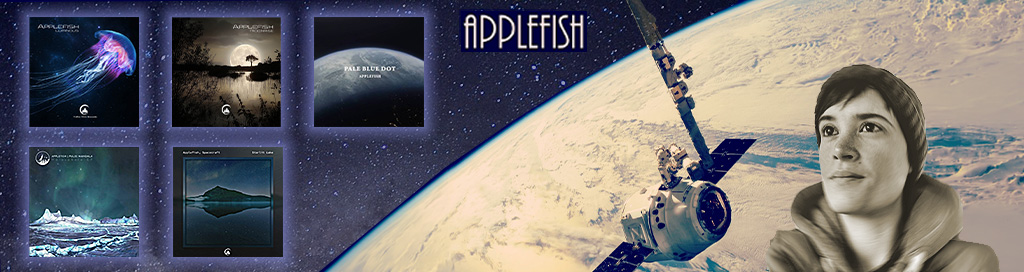
We’re floating on a luxurious bed of pipe organ—the first thing you hear on the 2022 debut album of Bristol, England, electronic musician NICOLA “NIK” DAVIES—best known by her recording alias APPLEFISH.
By our unofficial count, she’s a member of the seventh or eighth generation of electronic musicians, starting from its formative years in the 1920s and 30s at the dawn of playable electronic instruments like the Russian Theremin and the French Ondes Martenot. From the 1930s to the 1960s, a handful of academic laboratories became the venues for the development of electronic music and electro-acoustic tape music. They had the real estate, the hardware, and the money.
The transition from academic to popular electronic music was driven by the invention of analog synthesizers in the 1970s. Relatively affordable instruments and recording tools enabled a new generation of popular electronic artists in Germany like TANGERINE DREAM, KLAUS SCHULZE, and ASHRA, who invented a cosmic sound that went viral and spread to Europe, the U.S. and Japan.
That’s where Hearts of Space began, as a Bay Area late night radio program in 1973, and then a nationally syndicated program in 1983, with a mission to expand the audience for “ambient, space, atmospheric and contemplative music.”
Disco had pioneered use of electronic instruments in dance music in the late 1960s. By the 1980’s a new generation of creative DJs and live performers attracted a worldwide audience for high-energy EDM (Electronic Dance Music). BRIAN ENO defined Ambient in 1978, while a group of serious electronic composers and recording artists like STEVE ROACH, MICHAEL STEARNS, ROBERT RICH, and thousands more around the world, made personal artistic music, and self-released it on cassette and CD. Today they upload it to free or inexpensive internet streaming services that provide effortless access to a worldwide audience.
And it is here, dear space fan, that we encounter the latest generation of electronic recording artists like the subject of this program, NICOLA “NIK” DAVIES aka APPLEFISH. She describes her music with precision as “a fusion of space ambient, downtempo, and electronica, with substantial cross-pollination from drone, psy-chill, and modern classical genres. Much of the Applefish discography explores cosmic and astronomical themes, guiding listeners through ethereal voyages and otherworldly realms. The music interlaces immersive atmospheres with subtle, yet evocative melodic lines and layered, shimmering textures, intentionally evoking a sense of deep introspection and cosmic wonder.”
Thanks, Nik. Could not have said it better. Early music by APPLEFISH… on this transmission… of Hearts of Space.
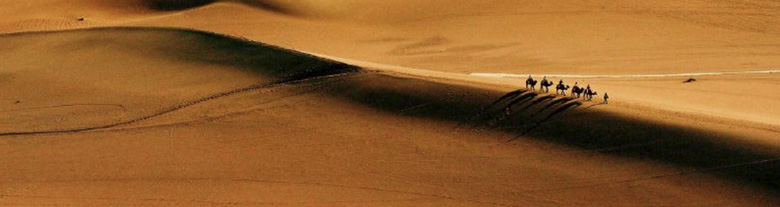
The term “The Silk Road” was invented by a German geographer in 1877. He was describing trade routes that go back to the Han Dynasty of China over 2000 years ago, connecting Europe with the major cultures of the Asian world…by land and by sea. The driving force was commercial, but like the Internet today, it also enabled the spread of social communication, technology, culture, food, and music.
In 1940 American anthropologist ALBERT KROEBER came up with a fancy name for the process: “Trans-Cultural Diffusion.” In music, traditions from many countries and intersecting influences over many centuries make sorting it out a challenge. There are common instruments, rhythms, scales, and approaches to making music. Each country added its own distinctive elements, and the process continues today—at electronic speed.
On this transmission of Hearts of Space….music derived from those way stations on the Silk Road…on a program called “TRANS-ASIAN DIFFUSION.” Music is by BOB HOLROYD, FRITZ HEEDE, TARIK BANZI, ANOUAR BRAHEM, OMAR FARUK TEKBILEK, ROBERT RICH & LISA MOSKOW, BENJY WERTHEIMER & DAVID MICHAEL.
Long before Spanish explorers arrived at the western edge of South America, the rugged regions of Bolivia, Peru, Ecuador and Chile bordered by the Andes Mountains were home to native Inca tribes that defined traditional Andean folk music.
After the colonial period, the charango and the ronroco, small 10-string instruments derived from the early Spanish guitar called the vihuela, became popular. Today they dominate the genre, along with the quena — an end-blown reed flute, and the antara — a semi-circular panpipe with an airy tone that sounds brilliant in the high mountain air.
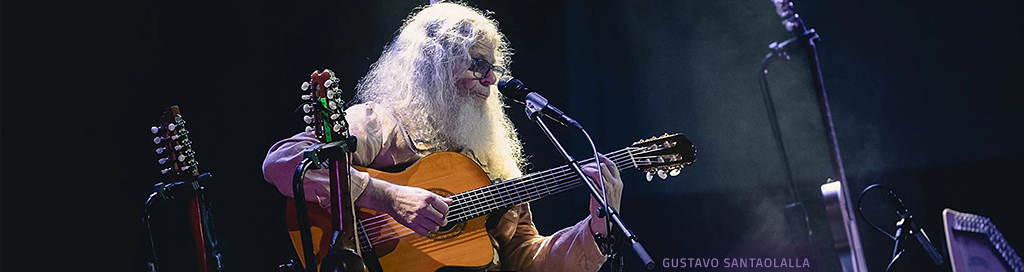
Andean music grew exponentially during the “World Music” trend of the 1970s and 80s, spawning hundreds of new groups, collaborations, and popular songs, while Harawi, an ancient traditional genre with slow, soulful, melodic songs played on the quena, shared an audience with New Age music. Those days are gone, but the genre has gained renewed attention in the 21st century from its use in major film scores by GUSTAVO SANTAOLALLA and others.
On this transmission of Hearts of Space, new Andean music by GUSTAVO SANTAOLALLA, AUKAI, JORGE ALFANO, OSCAR REYNOLDS, and AL LETHBRIDGE — inspired by the folk sounds of the high Andes plateau, on a program called “ALTIPLANO 3.”
We begin with the mysterious “Fourth World” music of ambient trumpeter/composer JON HASSELL: an apparition arising out of the hazy cross-cultural soundscape between classical Indian vocal music, electronics, and cool jazz. It’s a sound that’s been widely influential in contemporary music for over 25 years — a popular atmospheric hybrid that defies category…by design.
On this transmission of Hearts of Space, we invoke the spirits of departed masters like JON HASSELL, cool jazz trumpeter MILES DAVIS, Indian vocalist master PANDIT PRAN NATH and electronics pioneer KARLHEINZ STOCKHAUSEN…on a journey called MORE AMBIENT COOL. Additional music by PAUL HASLINGER, TWILIGHT ARCHIVE, PAUL SCHUTZE, NELSON FOLTZ & TOM LYNN, TOM HEASLY, and HAROLD BUDD.
Ahhhh, spring at last…or is it? Our most anticipated season has a habit of arriving in fits and starts: a few days of temperate glory…and then a chilled rerun of late winter; a sweet day of sunshine and birdsong…and then, a nasty day of cold rain and hail. It breeds a kind of disorientation you feel in your body…and makes you question where you are.
When ambient musicians focus on spring, they’re thinking of brighter timbres, more energetic rhythms, and warmer harmonies. Will the weather take the hint? It’s a toss-up, but the psychological effect, at least, can be comforting.
On this transmission of Hearts of Space…ambient electronics to summon and celebrate spring, on a program called “WARMING TREND.” Music is by ERIK WØLLO, RUDY ADRIAN, STEVE ROACH, ANDREW LAHIFF, AMONGST MYSELVES, TOM EATON, and PATRICK O’HEARN.