A Dark Ambient tribute to the fading light of autumn
THE FADING LIGHT of autumn…seems to activate a season-specific gene in the psyche of ambient musicians. Reluctantly, they put aside the energetic music of summer and return to the subtler qualities of the fall soundscape: slower tempos, darker tone colors, dissonant drones, somber chorales, ghostly voices, and melancholy songs.
Week by week the expansive energy of summer recedes, culminating in the harvest, followed by the withering of this year’s plants, preparation of the ground, kand scattering of seeds for next year’s crop. Though most of us no longer work on farms, we still celebrate descendants of the old harvest festivals on Halloween and Thanksgiving, the Jewish festival of Sukkot, the Chinese Mid-Autumn Moon Festival, and others.
On this transmission of Hearts of Space, a Dark Ambient tribute to the fading light and somber tone colors of the season, on a program called “THE DARK ZONE.” Music is by CAUL, ATRIUM CARCERI, INSECTARIUM, JAKE MUIR, SHANE MORRIS, SUN’S MUSE, and HILYARD.
Ambient-Classical atmospheres and introspections for autumn
AUTUMN ARRIVES QUIETLY, with less drama than other seasons: a gradual slowing of the solar-powered activity of summer, accompanied by a subtle cooling of the air and dimming of the light, as the sun moves south for the winter.
In contrast, the animal world is all activity-a flurry of preparation for the challenges of the season to come-while the changing colors of the leaves signals a silent chemistry of decay and transformation that fuels the next generation of plants, and feeds the animals with fruits and seeds.
For ambient composers, it’s time to explore slower tempos, darker harmonies, descending progressions, the bittersweet timbres of the woodwind family, and the metallic overtones of bells and horns.
On this transmission of Hearts of Space, Ambient-Classical atmospheres and introspections for autumn, on a program called “DESCENDING DUSK.” Music is by THE AMNIS INITIATIVE, DEEPSPACE, DEBORAH MARTIN and JILL HALEY, CHRISTIAN WITTMAN, GEORGE WALLACE, and ISHQ.
The softly rolling hills and endless grasslands of “The Great Eurasian Steppe” are home to the mournful, archaic tones of the Armenian duduk—a more soulful member of the double reed family of woodwind instruments, like the western oboe and English horn.
A “steppe” is an eco-region of grassland plains with no trees except next to rivers and lakes. “The Great Eurasian Steppe” is the world’s largest, extending some 5,000 miles from today’s Eastern Europe, across Russia and the “stan” countries of Central Asia, through Manchuria and Mongolia to the western edge of China.
Since the Middle Paleolithic era over 100,000 years ago, the Eurasian Steppe has been the main overland route between Europe and Asia—the much older economic, political, and cultural predecessor of the more famous Silk Road, which matured during the Middle Ages.
In 2005, UNESCO (The United Nations Educational, Scientific and Cultural Organization) proclaimed the Armenian duduk and its music a “Masterpiece of the Intangible Heritage of Humanity,” along with other traditional creations of cultural communities.
On this transmission of Hearts of Space from our friendly Canadian guest producer D.J. EGAN, a program inspired by the ethno-ambient music of the Great Eurasian Steppe, with influences and instruments from ARMENIA, GREECE, TURKEY, LITHUANIA, FINLAND, and RUSSIA, and music by ARA DINKJIAN, SAVINA YANNATOU & PRIMAVERA EN SALONICO, DMITRY SOUL, DELAYMAN, SANS, SAULIUS PETREIKIS + RASA SERRA + THE UNIT 7 ALLSTARS, C.DIAB, and TWILIGHT TAPES.
THE SUN begins its long withdrawal from the northern hemisphere after the summer solstice in June. After the autumn equinox in September, the transition seems to accelerate. The days grow shorter, the nights grow longer, and the temperature cools, while the natural world changes color and prepares for the winter to come.
Since medieval times we’ve called this season “fall.” The word comes from Middle English, with Old English and Old German roots. Falling implies movement downward, and in autumn, declining solar energy brings a feeling of descending or falling into the season. In music it’s marked by slowing tempos, descending chord progressions, darkening timbres, and wistful, even melancholy emotions.
On this transmission of Hearts of Space…we descend into the autumn soundscape, a program called “FALLING.” Music is by DAVID DARLING, JOEP BEVING, CHRISTOPHER TIGNOR, HAMMOCK, LUDOVICO EINAUDI, and TOM EATON.
CONSIDER THE PIANO, SPACEFANS. For an instrument that was invented in Italy over 300 years ago, and can point to ancestors like the third century BC Greek “hydraulis.”—a shoreline pipe organ powered by Mediterranean waves — and early keyboard instruments like the Clavichord and the Harpsichord — the evolution of the piano might seem to be a settled matter. And while the forms and technologies of the modern piano were largely established by the early 20th century, there were still hundreds of improvements in design, materials and construction that continue today.
The most revolutionary development — the 20th century invention of playable keyboard-controlled electronic synthesizers — was driven by a furious pace of innovation at American, Japanese, and German companies, and vastly expanded the sonic capability of keyboard instruments.
All this work has given ambient musicians a wealth of creative resources to draw on. Early masterworks like the Romantic Classical orchestrations of VANGELIS, the chilled electronic flights of KLAUS SCHULZE, the hypnotic sequencer rhythms of TANGERINE DREAM, the abstract electro-acoustic environments of BRIAN ENO, and the extended electronic meditations of STEVE ROACH — created stylistic protocols for generations of ambient artists who followed.
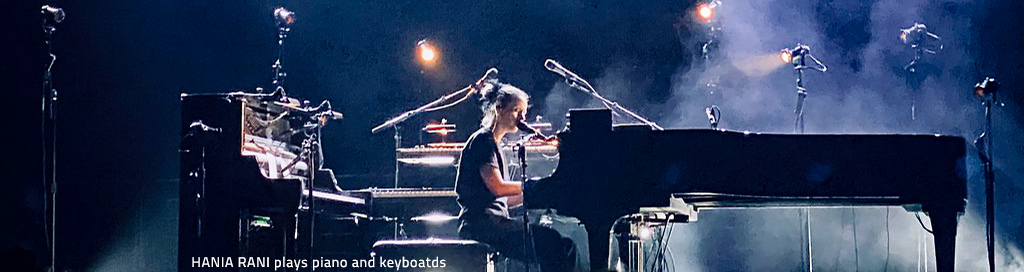
On this transmission of Hearts of Space, new music for piano and electronic keyboards inspired by the early pioneers, on a program called “PROTOCOLS FOR AMBIENT PIANO.” Music is by TOM EATON, BRUNO SANFILIPPO, ÓLAFUR ARNALDS, NILS FRAHM, HANIA RANI,TIM STORY & ACHIM ROEDELIUS, KEVIN KELLER, and BEN LUCAS BOYSEN, and PAUL HASLINGER & CHRISTIAN WITTMAN.
JANUARY 2015 would be the 100th birthday of DR. JOHN C. LILLY, one of the true visionaries of 20th-century science. Lilly’s life and work at the frontiers of human knowledge embraces the major themes of 20th-century bioscience. In his 86 years, Lilly made significant contributions to psychology, brain research, computer theory, medicine, ethics, dolphinology, and interspecies communication. Of special relevance for this program, Lilly’s interest in the nature of human consciousness led him to invent the isolation or floatation tank in the 1950s. Today there are thousands of Floatation Centers around the world.
The floatation tank is a large plastic container filled with 10 inches of warm water and 800 pounds of dissolved Epsom salt. This high-density liquid allows the body to float effortlessly, free for once from the burden of gravity. The water and air are both heated to skin temperature, so one soon loses the sense of the boundaries of the body. With no light and virtually no sound, it encourages a “sensory-reduced” state that promotes deep physical and mental relaxation, and ultimately allows the floater to explore “inner space.”
Hmmm. Does that sound familiar? Floating is one of the most common terms used to describe the effect of Ambient music.
Lilly began by investigating what would happen in an environment free of all sensory stimulation, but instead of the brain going to sleep as had been theorized, a whole new world of inner experience opened up. In the early 1960s, Lilly began experiments with LSD, and decided to take the drug in the isolation tank. Through this work, he arrived at a perspective that transcended the conflict between rationality and mysticism, religion and science.
On this transmission of Hearts of Space…a weightless journey in inner space, on a program called “FLOATATION.” Music is by MARCONI UNION, MARIO SCHONWALDER, STEVE ROACH. DIRK SERRIES, ALEX THEORY, GULAN, and LIQUID MIND.
Out of the ganja-fueled creative ferment of Jamaica came Reggae, and later, a studio remix style called “Dub.” Spacey, psychedelic, fat with drum n’ bass and heavily seasoned with reverb, echo and effects, it inspired English artists to gene-splice Dub with Ambient electronics, and call it “Ambient Dub.”
On this transmission of Hearts of Space, we follow the trail of Ambient Dub on a program called “DUBSHIP EUPHORIA.” Music is by JAH WOBBLE & MARCONI UNION, MOTIONFIELD, S7VEN, SOUNDS FROM THE GROUND, ISHQ, CYBER ZEN SOUND ENGINE & MATT BORGHI, and MIKTEK.
OVER THE LAST 40 YEARS, the music of both MICHAEL STEARNS and ROBERT RICH has earned the highest respect from long-time listeners to this program, as well as serious ambient fans around the world.
Beginning in the 1970’s, STEARNS in Los Angeles and in the 1980’s RICH at Stanford, were among the first to create important original work in those formative days of popular electronic music. Even when the early instruments were frustrating and difficult to work with, they persisted — because electronics opened up vast new realms of creative expression.
Later, they both integrated acoustic instruments and wordless voices into their music, enriching and deepening their sound. In time, Stearns moved into scoring and music supervision for immersive IMAX films and multi-channel theme park rides, and traveled the world recording natural environmental sounds, while ROBERT RICH became a prolific recording artist, collaborator, and mastering engineer for other independent musicians, created high quality sample libraries, and consulted on the design and development of electronic instruments.
In 2026, with Stearns 77 and Rich 63, they´re at the peak of their powers individually, and the only thing left undone was their first full collaboration as mature ambient masters, the mysteriously titled “REUNION OF BREATH AND WAVES.”
Today, the career of an ambient musician is impossible to predict. The old gatekeepers are gone, replaced by powerful personal studios and a digital distribution system that connects composers and performers with a worldwide audience. Success is not guaranteed; you must be motivated, persistent, innovative, and impressively talented. But for those who can live with the uncertainty, time and practice can bring “maturity, ” and with it, the possibility of “mastery”— levels of excellence sought by many, achieved by few.
On this transmission of HEARTS of SPACE, we celebrate the expansion of creative space and artistic freedom, with electro-acoustic music by MICHAEL STEARNS and ROBERT RICH from “REUNION OF BREATH AND WAVES;” by DREAMSCAPIST from “EREMITISM;” by KELLY DAVID from “ILLUSIVE;” and by JEFF PEARCE from “SKYWARD.”
The art of creating value with skill, and doing it perfectly. A program called “MASTERY”…on this transmission… of Hearts of Space.
WHEN THE COMPREHENSIVE HISTORY OF ELECTRONIC MUSIC is written, the period from the arrival of playable synthesizers in the 1960s and the introduction of drum machines in the 1970s until now will seem particularly disruptive. Synthesizers propelled the music out of academic laboratories and on the road to the diverse electronic space, ambient, and atmospheric genres of today. At the same time, drum machines propelled popular music out of the recording studio and onto the dance floor, where DJs produced an endless variety of complex beats that paved the road to EDM—Electronic Dance Music, and IDM—Intelligent Dance Music.
When the summer heat arrives, it stimulates rhythmic activity everywhere. Ironically, ambient is one of the few genres that can live without rhythm, but percussion is so fundamental to popular music that many ambient artists can’t resist using it. On this transmission of Hearts of Space, percussion-powered ambient for late summer, on a program called (with due respect to the song by Peter Gabriel) “RHYTHM OF THE HEAT.” Music is by AES DANA, VIR UNIS, STEVE ROACH, CHRIS MEYER’S ALIAS ZONE, EXTRAWORLD, BIFF JOHNSON, JOYSTICK, and THIERRY DAVID.
BACK IN 2009, I wrote this introduction to a program called ‘INDIA EVOLUTION” :
“Hundreds of years ago, while Western music turned right at polyphony, harmony, and the equal-tempered scale, Indian classical music continued to develop the old modal system of scales and natural intervals, in a vocal-centered, monophonic style.”
“Where we created chords and counterpoint, monumental symphonies, hymns and songs, Indian music continued to evolve the melodic sophistication of raga, the rhythmic complexity of tala, and the patient pursuit of mood and depth.”
On this transmission of Hearts of Space, we return to the sublime world of Indian Classical and Indian-influenced ambient music, on a program called “INDIA EVOLUTION 2.” Music is by JASDEEP SINGH DEGUN, PREM JOSHUA & MANISH VYAS, ANCIENT FUTURE, FILIP HOLM, ROSS AINSLIE, AMELIA CUNI & WERNER DURAND, STEVE GORN & MANOSE, and RAJENDRA TEREDESAI.